The Best Angle to Tilt Your Solar Panels in Pakistan
By PSI Editorial • June 8, 2026
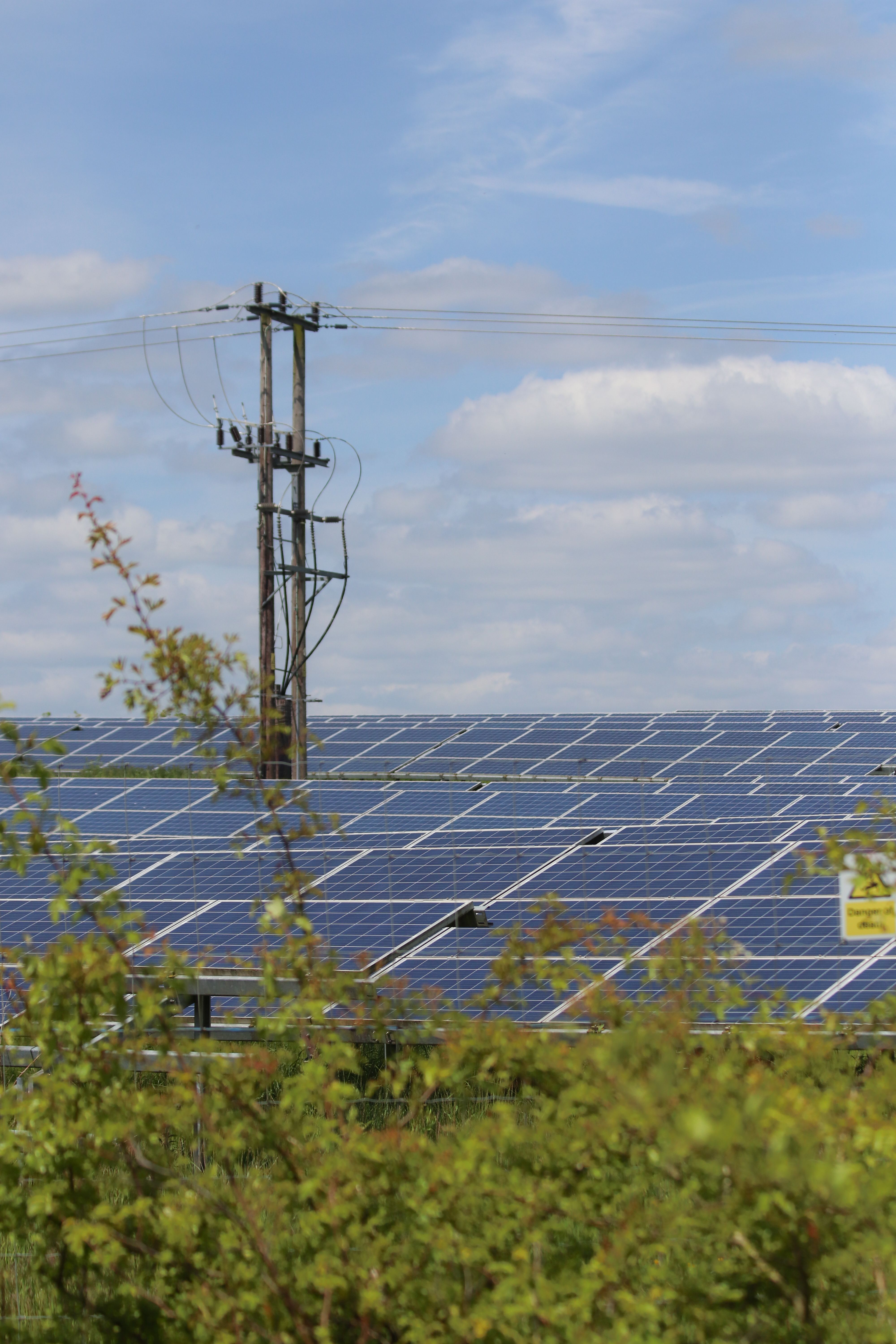
Atomic Summary: The optimal tilt angle for solar panels in Pakistan varies by city, generally matching the city's latitude. For Lahore, tilt them South at ~31 degrees; for Karachi, ~25 degrees; and for Islamabad, ~33 degrees. Proper orientation ensures maximum sunlight absorption and efficiency year-round.
If you lay your solar panels completely flat on the roof, you are throwing away a massive chunk of potential energy. Many homeowners in Pakistan invest millions of rupees into high-quality Tier-1 solar panels and top-tier inverters like Solis or Growatt, only to lose 10% to 15% of their total generation simply because the mounting structures are incorrectly angled.
With electricity prices from WAPDA and K-Electric constantly rising, optimizing your solar yield is no longer optional. But what exactly is the perfect angle to tilt your panels at in Pakistan? Does it change depending on whether you live in Lahore, Karachi, or Islamabad? Let us dive into the technical details, the exact mathematical formulas to use, and find out exactly how to position your solar panels for maximum Return on Investment (ROI).
Why Does the Tilt Angle Matter?
Solar panels work best when the sun's rays hit them at a perfectly perpendicular 90-degree angle. Because the Earth is tilted on its axis and orbits the sun, the position of the sun in the sky changes depending on two major factors:
- Your Geographical Location (Latitude): The closer you are to the equator, the higher the sun sits in the sky. If you are further north, the sun will appear lower on the horizon.
- The Time of Year: In Pakistan, the sun is high overhead during the scorching summer months (May to July) and much lower on the horizon during the winter months (November to January).
Alert: Shading Kills Efficiency
Regardless of how perfect your tilt angle is mechanically, if a water tank, a neighbor's wall, or a tree casts a shadow on even a small portion of your panel, the efficiency of the entire string will plummet. Always prioritize an unshaded, high-clearance location over the perfect mathematical angle.
The Golden Rule: Match Your Latitude
As a general rule of thumb, the most effective fixed tilt angle for your solar panels is equal to your city's latitude. If you do not plan on adjusting your panels physically between summer and winter, setting them at your exact latitude provides the best "sweet spot" for year-round average generation.
Optimal Fixed Tilt Angles for Major Pakistani Cities
Here is a quick reference table showing the best fixed angles for various cities across Pakistan to help you maximize your WAPDA or K-Electric net metering exports:
| City | Latitude (Approx.) | Recommended Fixed Tilt Angle |
|---|---|---|
| Karachi | 24.8° N | 20° - 25° |
| Lahore | 31.5° N | 28° - 32° |
| Islamabad / Rawalpindi | 33.7° N | 30° - 34° |
| Peshawar | 34.0° N | 31° - 35° |
| Quetta | 30.2° N | 28° - 32° |
| Multan | 30.1° N | 28° - 31° |
Direction Matters: Always Face True South
In the Northern Hemisphere (which includes Pakistan), the sun is always situated towards the southern half of the sky as it moves from East to West. Therefore, to capture the maximum amount of sunlight throughout the day, your panels must face True South.
Do not confuse True South with Magnetic South (the direction a compass points to). While the difference (magnetic declination) in Pakistan is relatively small, using a solar mapping app on your smartphone to find True South is the most accurate and recommended method by professional installers.
What If I Cannot Face True South?
Sometimes, roof layouts, water tanks, or structural constraints simply do not permit a South-facing installation. If you must deviate:
- South-East: Captures more morning sun. Great if you consume a lot of electricity early in the day or want to recharge batteries depleted overnight during load-shedding.
- South-West: Captures more afternoon sun. Highly recommended if you face heavy load-shedding or high peak-hour usage in the late afternoon.
- East/West splits: Using a dual-MPPT inverter, you can place half your panels facing East and half facing West. This creates a broader, flatter generation curve throughout the day, though the total peak output will be slightly lower than a pure South-facing array.
3 Steps to Seasonally Adjust Your Solar Panels
While a fixed angle is convenient, manually adjusting your panel tilt twice a year can yield an extra 4% to 8% in total annual generation. This might not sound like much, but for a 10kW system exporting units back to the grid via net metering, it adds up to thousands of PKR in savings over a single year.
Step 1: Summer Adjustments (April to September)
During the Pakistani summer, the sun is high overhead. To capture this direct sunlight, your panels should be laid flatter. The optimal summer tilt is roughly your Latitude minus 10 to 15 degrees.
- Lahore Summer Angle: ~16° to 20°
- Karachi Summer Angle: ~10° to 15°
Laying them flatter also reduces wind resistance during summer monsoon storms, providing an added layer of physical security to the structure.
Step 2: Winter Adjustments (October to March)
In winter, the sun hangs low on the southern horizon. To catch these low-angle rays, your panels need to be tilted up steeply. The optimal winter tilt is your Latitude plus 10 to 15 degrees. Furthermore, smog in cities like Lahore severely diffuses sunlight; a steeper angle helps catch whatever direct light penetrates the haze and allows rain to wash off dust and soot more easily.
- Lahore Winter Angle: ~40° to 45°
- Karachi Winter Angle: ~35° to 40°
Step 3: Secure the Structure for Wind Loads
Safety Warning: High Wind Loads
Steeply angled solar panels act like giant sails. A 45-degree tilt in winter will catch massive wind drafts. Ensure your mounting structure is made of high-gauge galvanized iron (GI) and securely anchored to the concrete roof using heavy-duty rawl bolts. Cheap L2 or L3 structures from local markets will tear right off during a strong windstorm.
Financial Impact: Why Optimization Saves You Money
Pakistan is seeing record-high electricity tariffs, with base rates and taxes pushing the per-unit cost to extreme levels. Every unit of electricity (kWh) generated by your solar system saves you approximately Rs. 50 to Rs. 65 depending on taxes, fuel adjustments, and slabs.
If optimizing your angle yields an extra 500 kWh annually on a 10kW system, that is an extra Rs. 30,000 saved per year—all for simply ensuring your installer sets the correct tilt. Over the 25-year lifespan of Tier-1 solar panels, this simple optimization can equate to over 750,000 PKR in additional savings.
If you are financing your system through schemes like Meezan Bank's Solar Financing, maximizing your generation ensures your monthly savings comfortably cover your loan installments, improving your overall cash flow.
Conclusion
The optimal tilt angle for solar panels in Pakistan is tightly linked to your city's latitude. For a hassle-free, set-it-and-forget-it installation, tilt your panels South at roughly 31 degrees in Lahore, 33 degrees in Islamabad, and 25 degrees in Karachi. If you are willing to make seasonal adjustments, lowering the angle in summer and raising it in winter will squeeze every last drop of efficiency out of your investment.
Always prioritize a strong, wind-resistant mounting structure and an unshaded location over getting the mathematical angle absolutely perfect. A structurally sound, well-placed system will serve you reliably against load-shedding and high bills for decades.
Frequently Asked Questions
What is the best angle for solar panels in Lahore?
The optimal fixed tilt angle for solar panels in Lahore is generally between 25 and 31 degrees facing True South. This ensures maximum sunlight exposure throughout the year.
Should I change my solar panel angle in winter?
If your mounting structure allows it, increasing the tilt angle by 10 to 15 degrees in the winter helps capture the lower-hanging sun, boosting generation during short winter days.
What is the optimal tilt angle for Karachi?
Because Karachi is closer to the equator, the ideal fixed angle is shallower, usually around 20 to 25 degrees facing South.