Half-Cut Solar Panel vs Full Cell: Which is Better for Pakistan 2026?
By PSI Editorial · 7 min read · Updated September 2026
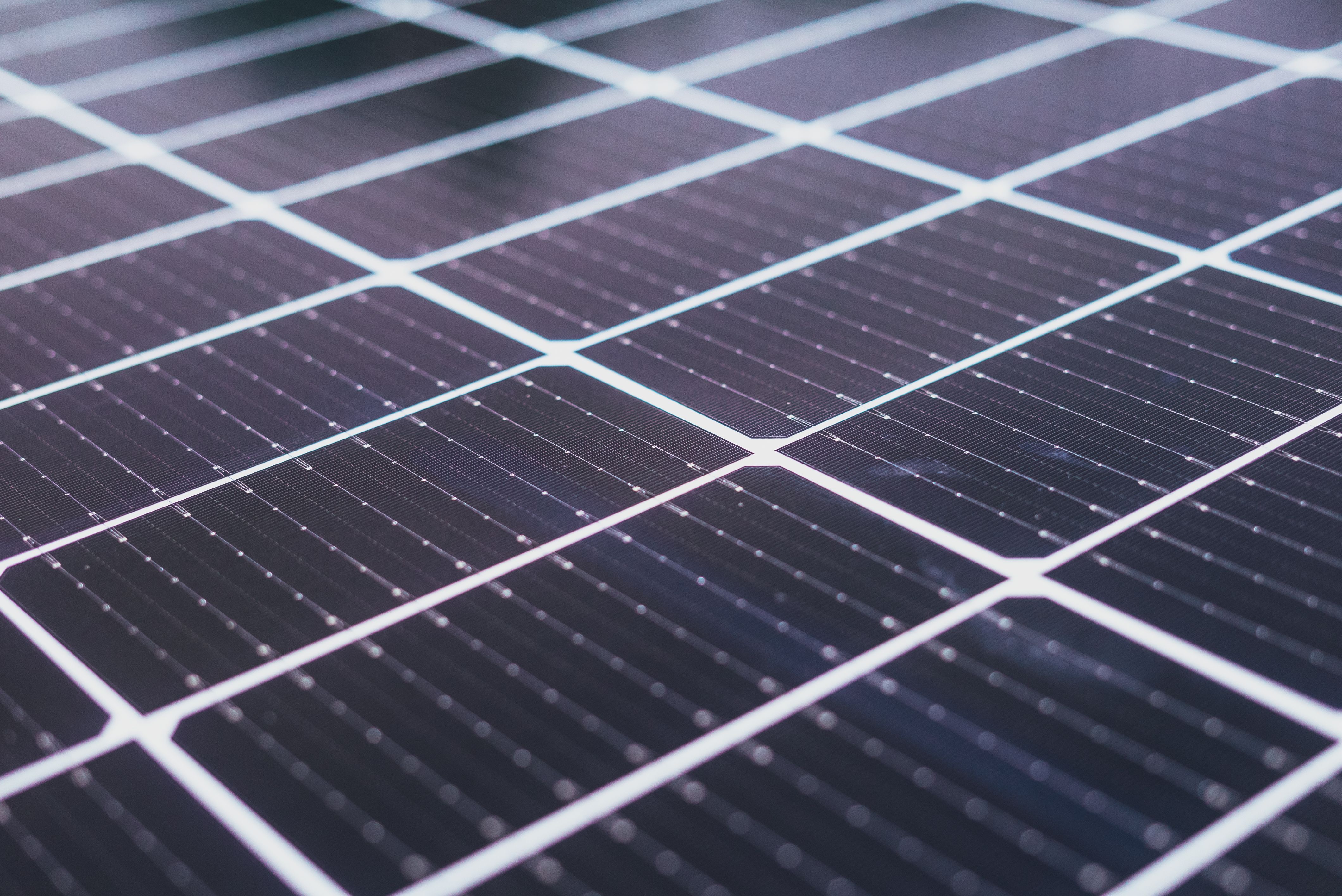
Atomic Summary: Half-cut solar panels are decisively better for Pakistani conditions in 2026. They produce 2–5% more energy, handle Pakistan's 40–48°C summer heat more efficiently (lower temperature coefficient), and perform better under partial shading from water tanks, dishes, and rooftop structures. The Rs. 4,000–6,000/panel premium is recovered within the first year of higher generation.
What Are Half-Cut Solar Cells?
In a standard (full cell) solar panel, each silicon cell is a full square or pseudo-square roughly 156–182mm across. A half-cut panel literally cuts each cell in half using a precision laser, producing cells roughly 78–91mm wide. These smaller cells are then wired in series-parallel configurations within the same panel frame.
The physics advantage: cutting the cell in half reduces the current flowing through each cell by 50%. Since resistive heating (I²R losses) scales with the square of current, halving the current reduces resistive losses by 75%. The result is 2–5% more power from the same amount of silicon — free extra energy from better engineering.
Half-Cut vs Full Cell: Complete Comparison
| Feature | Full Cell Panel | Half-Cut Panel | Winner |
|---|---|---|---|
| Power output | Baseline | +2–5% more power | Half-cut |
| Heat performance (Temp. Coeff.) | -0.38 to -0.42%/°C | -0.33 to -0.37%/°C | Half-cut |
| Shading tolerance | One shaded cell drops full string | Only half the panel affected | Half-cut |
| Microcracks resistance | Standard | Better (smaller cells = less mechanical stress) | Half-cut |
| Price per panel (585W) | Rs. 20,000–26,000 | Rs. 24,000–32,000 | Full cell (lower cost) |
| Long-term value | Good | Excellent | Half-cut |
Why Half-Cut Panels Outperform in Pakistan's Heat
Pakistan's summers are brutal for solar panels. Lahore reaches 46°C, Multan hits 50°C, and even coastal Karachi sees 42°C rooftop temperatures. All solar panels lose efficiency as temperature rises — but half-cut panels lose less:
- A standard full cell panel rated at 585W at 25°C (STC) will produce approximately 468W at 45°C (20°C above STC × 0.40%/°C = 8% loss).
- A half-cut panel of the same 585W rating will produce approximately 480W at 45°C (20°C × 0.34%/°C = 6.8% loss).
- Difference: 12W per panel per hot hour. For a 20-panel system over 6 summer hours per day and 150 hot days per year: 12W × 20 panels × 6 hrs × 150 days = 216 kWh extra per year.
- At Rs. 30/unit, that is Rs. 6,480 extra savings per year — enough to recover the panel premium in under 2 years.
Shading Performance — Critical for Pakistani Rooftops
Pakistani rooftops typically have water tanks, TV satellite dishes, AC outdoor units, and neighbouring building overhangs that cause partial shading on panels at different times of day. This is where half-cut technology delivers a decisive advantage:
In a full cell panel, all cells in a string are connected in series. If one cell is shaded, the output of the entire string drops proportionally — like a Christmas light chain where one broken bulb stops all the others. In a half-cut panel, the upper and lower halves operate independently. Shading on the top half does not significantly affect the bottom half's output.
For typical Lahore, Karachi, or Islamabad rooftops with some shading, half-cut panels can generate 8–15% more energy in real-world conditions compared to full cell panels of the same nominal wattage.
Best Half-Cut Solar Panels Available in Pakistan 2026
| Brand | Model | Wattage | Temp. Coeff. | Price/Panel (Rs.) |
|---|---|---|---|---|
| Jinko Solar | Tiger Neo N-Type 585W HC | 580–600W | -0.30%/°C | 27,000–34,000 |
| LONGi Solar | Hi-MO 6 585W HC | 575–595W | -0.34%/°C | 25,000–32,000 |
| Canadian Solar | HiKu6 Mono PERC 585W HC | 575–590W | -0.35%/°C | 24,000–30,000 |
| Trina Solar | Vertex S+ 585W HC | 575–595W | -0.34%/°C | 24,500–31,000 |
When Full Cell Panels Make Sense
Despite the advantages of half-cut technology, full cell panels remain a reasonable choice when:
- Budget is very tight: The Rs. 4,000–6,000/panel premium adds up to Rs. 80,000–120,000 on a 20-panel system. If this stretches the budget beyond reach, quality full cell panels are far better than no solar at all.
- Zero shading on rooftop: If your installation site has perfect unobstructed sun exposure all day, the shading advantage of half-cut is less significant.
- Short-term ownership: If you plan to sell the property within 3–5 years, the premium may not fully pay back.
Frequently Asked Questions
Are half-cut solar panels better than full cell panels for Pakistan?
Yes — for Pakistani conditions. Half-cut panels produce 2–5% more energy, handle our extreme summer heat better (lower temperature coefficient), and perform significantly better under partial shading from water tanks, TV dishes, and rooftop structures common across Pakistan. The premium pays back within 1–2 years.
What is the price difference between half-cut and full cell solar panels in Pakistan?
In 2026, half-cut mono panels (585W) cost Rs. 24,000–32,000 per panel, while full cell mono panels of the same wattage cost Rs. 20,000–26,000. The Rs. 4,000–6,000 premium per panel is typically recovered in under two years through higher energy production in Pakistan's hot, sometimes-shaded rooftop conditions.
Do half-cut solar panels work better in Pakistani summers?
Yes. Half-cut panels have a lower temperature coefficient (−0.30 to −0.35%/°C vs −0.38 to −0.42% for standard full cell). On a 45°C summer day, a half-cut panel produces 3–6% more power than an equivalent full cell panel of the same rated wattage — a meaningful difference over Pakistan's long, hot season.
Related: Solar Panel Price · Tier-1 Panel List · 5kW System Price