1 Ton Inverter AC Solar Requirements in Pakistan (2026 Guide)
By PSI Editorial • June 8, 2026
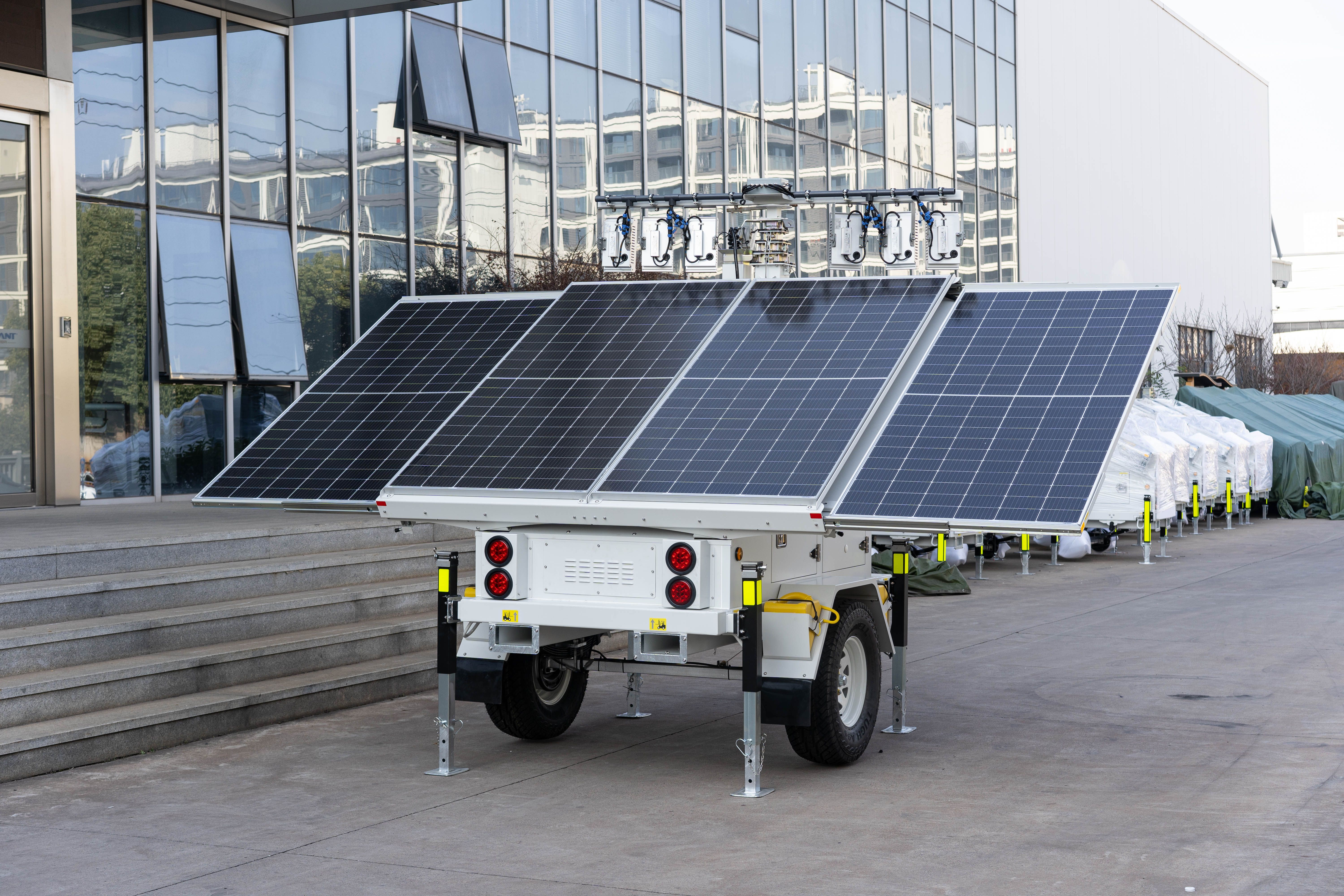
Atomic Summary: Running a 1-ton inverter AC during the daytime in Pakistan requires a minimum 3.6 kW hybrid inverter paired with four to six 585W Tier-1 solar panels. To run the AC at night, you must add a 48V 100Ah lithium (LiFePO4) battery bank (4.8 kWh), as traditional tubular lead-acid batteries degrade rapidly under continuous heavy AC loads. Under the 2026 net billing regulations, maximizing direct solar self-consumption during peak sunshine hours is the most financially viable strategy for Pakistani homeowners.
In Pakistan, summer temperatures regularly exceed 45 degrees Celsius across Punjab and Sindh. In cities like Lahore, Multan, and Karachi, air conditioning is a basic necessity. However, climbing WAPDA tariffs and fuel adjustments make running an AC on grid power financially crippling. A 1-ton inverter air conditioner (AC) is the most common choice for cooling standard bedrooms. Transitioning this load to solar power is an excellent investment, but sizing the system correctly requires a solid understanding of local environmental conditions, power demand, and battery options. Designing a system that works efficiently under intense heat, dust, and voltage instability is critical to ensuring your solar setup pays off. Let us break down the exact panel, battery, and inverter requirements for your 1-ton AC.
Understanding the Power Demand of a 1-Ton Inverter AC
To design an efficient solar system, you must understand how a 1-ton DC inverter AC consumes energy. Unlike older, fixed-speed air conditioners that cycle their compressors fully on or off, inverter units utilize variable-speed compressors. When first turned on, a 1-ton inverter AC runs at maximum capacity to cool the room, drawing 1,000 to 1,200 Watts of continuous power. Additionally, the compressor start-up demands a brief surge that can reach 1,500 Watts.
Once the room reaches the target temperature (for example, 26 degrees Celsius), the compressor scales down, and consumption drops to a steady 400 to 600 Watts. However, in extreme ambient temperatures exceeding 45 degrees Celsius, the outdoor heat prevents the condenser from dissipating heat quickly. This forces the compressor to run at higher speeds for longer periods, meaning the AC might continue drawing 800 to 1,000 Watts even after the room is cooled. Therefore, systems must be sized to handle real-world heat loads rather than idealized laboratory specifications.
Inverter Sizing (kVA vs kW) in Pakistan
Selecting the right inverter is the foundation of your solar setup. Hybrid inverters in Pakistan are rated in both kVA and kW. For running a 1-ton inverter AC, a 3.2 kVA or 3.6 kW hybrid inverter is the absolute minimum entry point. This size handles the AC startup surge and its running load. However, a 3.6 kW inverter leaves little headroom for other appliances. If you want to check how this setup matches larger houses, read our guide on a 3kW solar system for a small house.
If you plan to run your AC while also powering other household loads like a refrigerator, water pump, and ceiling fans, you must scale up. In such cases, upgrading to a 5 kW hybrid inverter is highly recommended. A 5 kW system offers a safe buffer, preventing the inverter from overloading. Reliable hybrid brands in Pakistan include Inverex (Veyron and Nitrox series), Knox, Crown Micro, and Solis. If your load is larger, you should consider a 2-ton AC solar system sizing setup.
Sizing the Solar Panel Array
To run a 1-ton inverter AC directly during the day, you must generate enough wattage to cover the AC load and base home appliances. In June 2026, the standard for residential installations in Pakistan is Tier-1 monocrystalline half-cut solar panels, typically rated at 585 Watts per panel. Brands like Jinko Solar (Tiger Neo N-Type), LONGi (Hi-MO 6), and Canadian Solar dominate the local market.
Do not calculate solar panel requirements based purely on nominal ratings. In Pakistan, summer ambient temperatures soar past 45 degrees Celsius, causing solar panels to suffer from heat-induced efficiency degradation. The temperature coefficient of a typical N-type panel is approximately -0.30 percent per degree Celsius. When cell temperatures reach 70 degrees Celsius under direct sunlight, the panel loses around 13 to 15 percent of its output. Furthermore, airborne dust and smog in cities like Lahore can cause an additional 5 to 10 percent loss.
Therefore, a 585W panel realistically generates about 440 to 470 Watts during peak hours. To consistently power a 1-ton inverter AC (1,000W running) and basic home loads (600W), you need at least four 585W panels (2.34 kW nominal array). However, to guarantee smooth operation under dusty and extremely hot conditions, installing five or six 585W panels (producing a 2.92 kW to 3.51 kW array) is highly recommended. To inventory your appliances, check our guide on how to calculate home solar load.
Daytime vs. Night-time Sizing: The Battery Conundrum
Running your AC during the day is highly cost-effective because the power is consumed directly as it is generated, avoiding battery wear. Running the AC at night requires storing solar energy in a battery bank, which significantly increases initial capital expenditure.
To run a 1-ton inverter AC at night for an average of 8 hours, assuming the room stabilizes and the AC averages 500 Watts of consumption, you will need a total of 4,000 Watt-hours (4 kWh) of usable energy storage. There are two primary battery technologies available in Pakistan: tubular lead-acid batteries and lithium iron phosphate (LiFePO4) batteries.
Tubular lead-acid batteries (like AGS, Phoenix, or Volta) are a common, low-cost option. However, they are poorly suited for running air conditioners. Tubular batteries have a maximum recommended Depth of Discharge (DoD) of 50 percent. A 12V 200Ah tubular battery stores 2.4 kWh of nominal energy, but only 1.2 kWh is usable. To run your AC for 8 hours, you would need a 48V bank consisting of four 200Ah tubular batteries in series. Furthermore, drawing continuous high current causes severe voltage sag and heats up the battery plates, often destroying the bank within 1.5 to 2 years. Homeowners can read more about these differences in our detailed article comparing lithium vs tubular battery options.
Lithium (LiFePO4) batteries (such as Narada, Pylontech, or Dyness) are the superior choice. A standard 48V 100Ah lithium battery pack provides 4.8 kWh of nominal storage. Since lithium can be safely discharged up to 90 percent (90% DoD), it yields 4.3 kWh of usable energy, enough to power your AC for a full night. Lithium batteries do not suffer from voltage sag, require zero maintenance, charge much faster, and last for 10 to 15 years.
System Configurations and Estimated Cost in Pakistan
To help you budget, the following table details the three main system configurations for running a 1-ton inverter AC on solar power in Pakistan. These estimates reflect the market pricing in June 2026, including average costs for hybrid inverters, Tier-1 panels, battery banks, framing structures, and professional installation services.
| System Configuration | Key Specifications | AC Runtime Support | Approx. Cost (PKR, June 2026) |
|---|---|---|---|
| Option 1: Daytime-Only Solar (Hybrid/Off-Grid) | 3.2kW/3.6kW Hybrid Inverter, 4 x 585W Panels (2.34kW Array), No Battery | Daytime only (10:00 AM to 4:00 PM) during peak sunshine hours | PKR 280,000 to PKR 350,000 |
| Option 2: Hybrid with Tubular Batteries (Short Backup) | 3.6kW Hybrid Inverter, 5 x 585W Panels (2.92kW Array), 2 x 12V 200Ah Tubular Batteries | Daytime solar plus 2 to 3 hours of night backup | PKR 420,000 to PKR 490,000 |
| Option 3: Hybrid with Lithium Battery (Full Night Backup) | 5.6kW/6kW Hybrid Inverter, 6 x 585W Panels (3.51kW Array), 1 x 48V 100Ah Lithium Battery | Daytime solar plus 7 to 9 hours of night backup | PKR 680,000 to PKR 780,000 |
The 2026 Net Billing Reality in Pakistan
In February 2026, the National Electric Power Regulatory Authority (NEPRA) officially phased out the old net metering policy, replacing it with a new net billing framework. Under the previous net metering system, excess solar electricity exported to the grid was offset against imported grid units at a highly favorable rate of around Rs 35 to Rs 45 per unit. Under the 2026 net billing rules, the price paid to solar owners for exporting power to the grid is capped at a national average of approximately Rs 8.13 per unit. Meanwhile, the cost of importing electricity from the grid remains high, ranging from Rs 48 to over Rs 65 per unit depending on peak slabs and taxes.
This policy shift has completely changed the economics of solar in Pakistan. Sending solar power back to K-Electric or LESCO is no longer a highly profitable venture. To get the best return on your solar investment, you must focus on self-consumption. This means you should run your 1-ton inverter AC, water pump, and other heavy loads during the day when your solar panels are generating peak power. By consuming your solar power on-site, you save Rs 50+ per unit of avoided grid imports, which is much better than exporting it for Rs 8.13 per unit. This self-consumption strategy is the most effective way to reduce your monthly electricity bills under the current regulatory landscape.
Five Essential Recommendations for Sizing Your Solar AC Setup
To get the most out of your solar AC installation, follow these five essential recommendations:
- Select Tier-1 Solar Panels: Always choose Tier-1 solar panels from reputable brands like Jinko Solar, LONGi, or Canadian Solar. Verify their authenticity using serial numbers and flash reports to avoid counterfeit products.
- Choose the Right Inverter Size: Select a hybrid inverter with a capacity of at least 3.6 kW. This ensures you have enough headroom to run base home loads like a refrigerator and ceiling fans alongside your air conditioner.
- Prioritize Lithium Storage: Invest in a 48V lithium (LiFePO4) battery instead of tubular batteries if you require nighttime backup. Lithium offers superior life cycle value and safety in high-temperature environments.
- Optimize AC Thermostat Settings: Set your inverter AC temperature to 26 degrees Celsius and use a ceiling fan to distribute the cold air. This reduces compressor power draw by up to thirty percent compared to setting it at 18 degrees.
- Work with Certified Professionals: Hire a certified solar installer who complies with NEPRA safety regulations. Ensure they perform proper earthing for the DC panels and AC inverter, and use high-quality copper cables to minimize electrical fire hazards.
Caution: Dealing with high-voltage DC wiring, battery banks, and hybrid inverters presents significant shock and fire risks. Always consult a certified professional installer to handle wiring, breaker installation, and earthing system construction. Never attempt DIY electrical connections on solar arrays.
Frequently Asked Questions
How many solar panels are needed to run a 1-ton inverter AC during the day in Pakistan?
To run a 1-ton inverter AC during the day, you need a minimum of four 585W solar panels (forming a 2.34 kW array) and a 3.6 kW or 4.2 kVA hybrid inverter. This capacity accounts for real-world losses due to dust, wiring, and the extreme 45 degrees Celsius heat of Pakistani summers, leaving enough backup power to support basic home appliances.
Can you run a 1-ton inverter AC at night on tubular batteries?
While you can run a 1-ton inverter AC on tubular batteries, it is highly inefficient and not recommended. A 1-ton AC will drain a standard 24V 200Ah tubular battery bank in less than three hours. Constant deep discharging damages lead-acid plates within a year. A 48V 100Ah lithium battery is a far better long-term investment.
What is the export rate under Pakistan's 2026 net billing rules?
Under the NEPRA net billing policy introduced in February 2026, the export rate for solar energy pushed back to the grid is capped at approximately Rs 8.13 per unit. Because grid import tariffs exceed Rs 50 per unit, homeowners should prioritize self-consumption by running high-load appliances like inverter ACs during peak daylight hours.
What is the total cost of a solar setup for a 1-ton inverter AC in Pakistan?
As of June 2026, a daytime-only solar setup (3kW to 3.6kW inverter and four to six 585W panels) costs between PKR 280,000 and PKR 350,000. If you add a 48V 100Ah lithium battery for nighttime operation, the total system cost increases to between PKR 650,000 and PKR 800,000 depending on mounting structures and installation quality.