Can You Install Solar Panels Vertically on a Wall in Pakistan?
By PSI Editorial • June 10, 2026
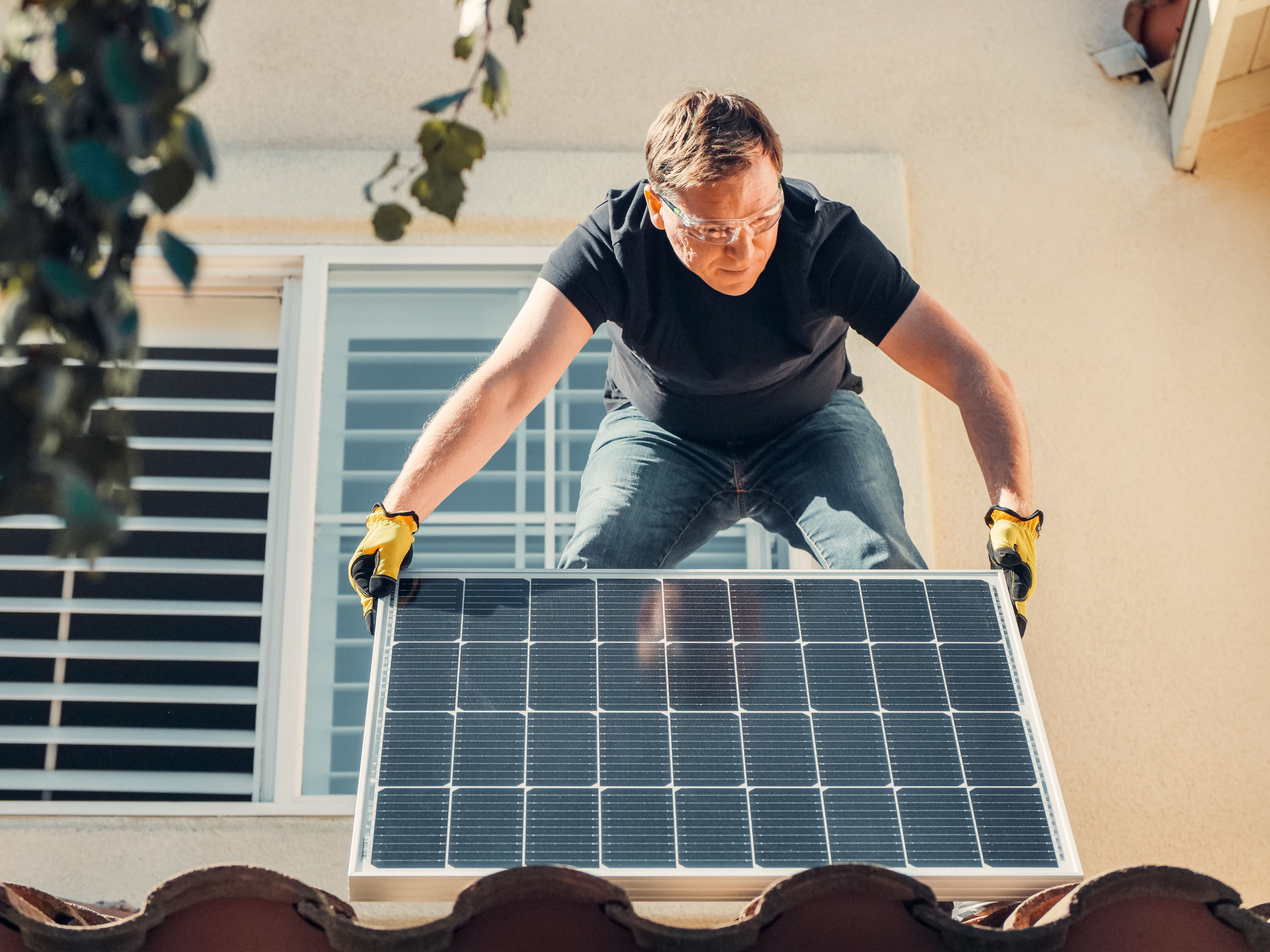
Atomic Summary: Yes, you can mount solar panels vertically (90 degree tilt) on a wall in Pakistan, but expect a 25% to 30% loss in annual energy production compared to optimally tilted rooftop panels. Vertical panels must face True South, perform surprisingly well in winter, accumulate far less dust, and are an excellent solution for apartments and buildings with limited rooftop space. The trade-off between lower output and space utilization makes sense in specific scenarios.
You live in a multi-story apartment building in Lahore, Karachi, or Islamabad. The roof is either shared among dozens of flats, occupied by water tanks, or controlled by the building management. You have a south-facing balcony wall and wonder: can I just bolt solar panels flat against the wall? The answer is yes, but with important caveats that determine whether it is worth the investment.
The Science: Why Vertical Panels Lose Efficiency in Pakistan
Solar panels generate maximum power when sunlight hits them at a perpendicular (90 degree) angle. This is called the "angle of incidence." Pakistan lies between approximately 24°N (Karachi) and 37°N (Islamabad/Peshawar) latitude. The optimal fixed tilt angle for maximum annual production equals roughly your latitude, which means:
- Karachi: Optimal tilt of 24 to 26 degrees
- Lahore: Optimal tilt of 31 to 33 degrees
- Islamabad: Optimal tilt of 33 to 35 degrees
A vertical panel is mounted at 90 degrees, which is 55 to 66 degrees away from the optimal tilt. During summer months (June to August), when the sun is nearly directly overhead at solar noon in Pakistan, the sunlight hits a vertical panel at an extremely oblique angle, drastically reducing power generation. In contrast, during winter (December to February), the sun sits much lower on the horizon, and the angle of incidence on a vertical panel improves dramatically.
Seasonal Output Comparison: Vertical vs Optimal Tilt
| Season | Sun Altitude at Solar Noon (Lahore) | Optimal Tilt Output | Vertical (90°) Output | Vertical vs Optimal Loss |
|---|---|---|---|---|
| Summer (June) | ~83° | 100% | ~45% to 55% | -45% to -55% |
| Spring/Autumn (March/Sept) | ~60° | 100% | ~70% to 80% | -20% to -30% |
| Winter (December) | ~35° | 100% | ~85% to 95% | -5% to -15% |
| Annual Average | Varies | 100% | ~70% to 75% | -25% to -30% |
The key insight: vertical panels are not uniformly bad. They are terrible in summer but surprisingly effective in winter, which makes them useful for specific applications.
Advantages of Vertical Solar Panel Installation
Despite the efficiency penalty, vertical mounting has several underappreciated benefits, especially in Pakistan:
1. Dramatically Reduced Dust Accumulation
This is arguably the biggest advantage for Pakistani installations. Dust accumulation on rooftop panels in Lahore, Faisalabad, and Karachi can reduce output by 15% to 25% within weeks during dry months. Vertical panels, by contrast, shed dust naturally because gravity pulls particles downward. Rain washes them almost completely clean. You save on regular cleaning costs and effort.
2. Better Thermal Performance
Vertical panels have better natural airflow on both sides (the wall side acts as a chimney effect, pulling cool air upward). In Pakistan's extreme summer heat, where rooftop panel surface temperatures can exceed 65°C, vertical panels typically run 5 to 10°C cooler. Since panel efficiency drops by approximately 0.35% per degree Celsius above 25°C, this temperature advantage partially offsets the angle-related efficiency loss.
3. Space Utilization for Apartments
For apartment dwellers and commercial buildings with limited roof access, wall space is often abundant and unused. A south-facing exterior wall can accommodate panels that would otherwise have no installation location.
4. Anti-Theft Advantage
Wall-mounted panels at height are significantly harder to steal than rooftop panels. This is a meaningful benefit in areas with high solar theft risk.
5. Aesthetic Integration
Modern building-integrated photovoltaic (BIPV) designs use vertical panels as part of the facade, combining energy generation with architectural design. This is increasingly common in commercial buildings in Islamabad and Lahore.
Step-by-Step: How to Mount Solar Panels on a Wall
- Wall assessment: The wall must be structural (load-bearing concrete or reinforced masonry). Do NOT mount panels on partition walls, plaster-only surfaces, or old brick walls without reinforcement. A structural engineer should verify the wall can handle the additional wind load (each panel weighs 25 to 30 kg and acts as a sail in wind).
- Orientation check: Use a compass app on your phone to confirm the wall faces True South (approximately 180° azimuth). A south-east or south-west wall is acceptable but reduces output by an additional 10% to 15%. East, west, or north-facing walls are not recommended.
- Mounting bracket selection: Use L-shaped stainless steel or galvanized steel brackets rated for outdoor use. The brackets must create a 5 to 10 cm gap between the panel and the wall to allow airflow for cooling and to prevent moisture trapping. Wall-mount-specific brackets are available from solar suppliers on Daraz and in major markets.
- Anchor installation: Use chemical anchors (epoxy-based) drilled into the concrete wall. Standard expansion anchors may loosen over time due to wind vibration. Each panel needs at least 4 anchor points rated for the combined weight plus wind load.
- Wiring and conduit: Run DC cables through weatherproof conduit along the wall surface. Cables must be UV-resistant and properly secured with cable clips every 50 cm. The conduit should enter the building through a properly sealed wall penetration to reach the inverter.
- Grounding: Ensure proper earthing/grounding of the panel frames and mounting structure. This is mandatory for safety and warranty compliance.
Alert: If you are renting or live in a housing society, check your building bylaws before installation. Some societies prohibit exterior modifications. DHA and Bahria Town communities typically require written NOC from the administration.
When Vertical Panels Make Sense (and When They Do Not)
| Scenario | Vertical Panels Recommended? | Reason |
|---|---|---|
| Apartment with no roof access | Yes | Only viable option; some power is better than none |
| South-facing balcony wall | Yes | Good compromise with plug-in micro-inverter systems |
| Commercial building facade | Yes | Large wall area, aesthetic BIPV integration |
| Supplemental winter heating | Yes | Vertical panels excel in winter when heating loads peak |
| House with available rooftop | No | Rooftop with optimal tilt is always superior |
| North or east-facing wall only | No | Output too low to justify installation cost |
| Heavy shading from adjacent buildings | No | Shading on vertical surfaces is even worse than on rooftops |
Balcony Solar: The Plug-and-Play Option
If you are an apartment dweller looking for a simple solution, "balcony solar" or "plug-in solar" systems are gaining popularity worldwide and are now available in Pakistan. These typically consist of:
- 1 to 2 solar panels (400W to 800W total)
- A micro-inverter that plugs directly into a standard wall outlet
- Simple balcony railing or wall brackets
The micro-inverter converts DC solar power to AC and feeds it directly into your home circuit, offsetting whatever appliance is drawing power at that moment. It does not require NEPRA approval, net metering agreements, or complex wiring. A 600W to 800W balcony system can generate 2 to 3 kWh per day (even with the vertical efficiency penalty), enough to power your fans, LED lights, router, and charge your devices throughout the day.
For those with some roof space, always prefer a properly tilted installation. Check our guide on optimal tilt angles for Pakistan to maximize your rooftop generation.
Frequently Asked Questions
How much efficiency do you lose with vertical solar panels in Pakistan?
In Pakistan (latitude 24 to 37 degrees North), vertical wall-mounted solar panels lose approximately 25% to 30% of annual energy production compared to optimally tilted rooftop panels. The loss is most severe in summer when the sun is nearly overhead, and least in winter when the low sun angle actually favors vertical surfaces.
Which direction should vertical solar panels face in Pakistan?
Vertical panels in Pakistan must face True South for maximum energy production. A south-facing vertical panel captures sunlight throughout the day as the sun moves from east to west across the southern sky. East-facing vertical panels only generate well in the morning, west-facing only in the afternoon, and north-facing vertical panels in Pakistan will produce almost zero useful energy.
Can I mount solar panels on a balcony wall in an apartment?
Yes. Balcony-mounted solar panels are becoming increasingly popular in Pakistani apartments. Small 400W to 800W plug-in micro-inverter systems can mount on south-facing balcony railings or walls without structural modifications. These systems directly offset your consumption and are ideal for apartments where rooftop access is shared or unavailable.